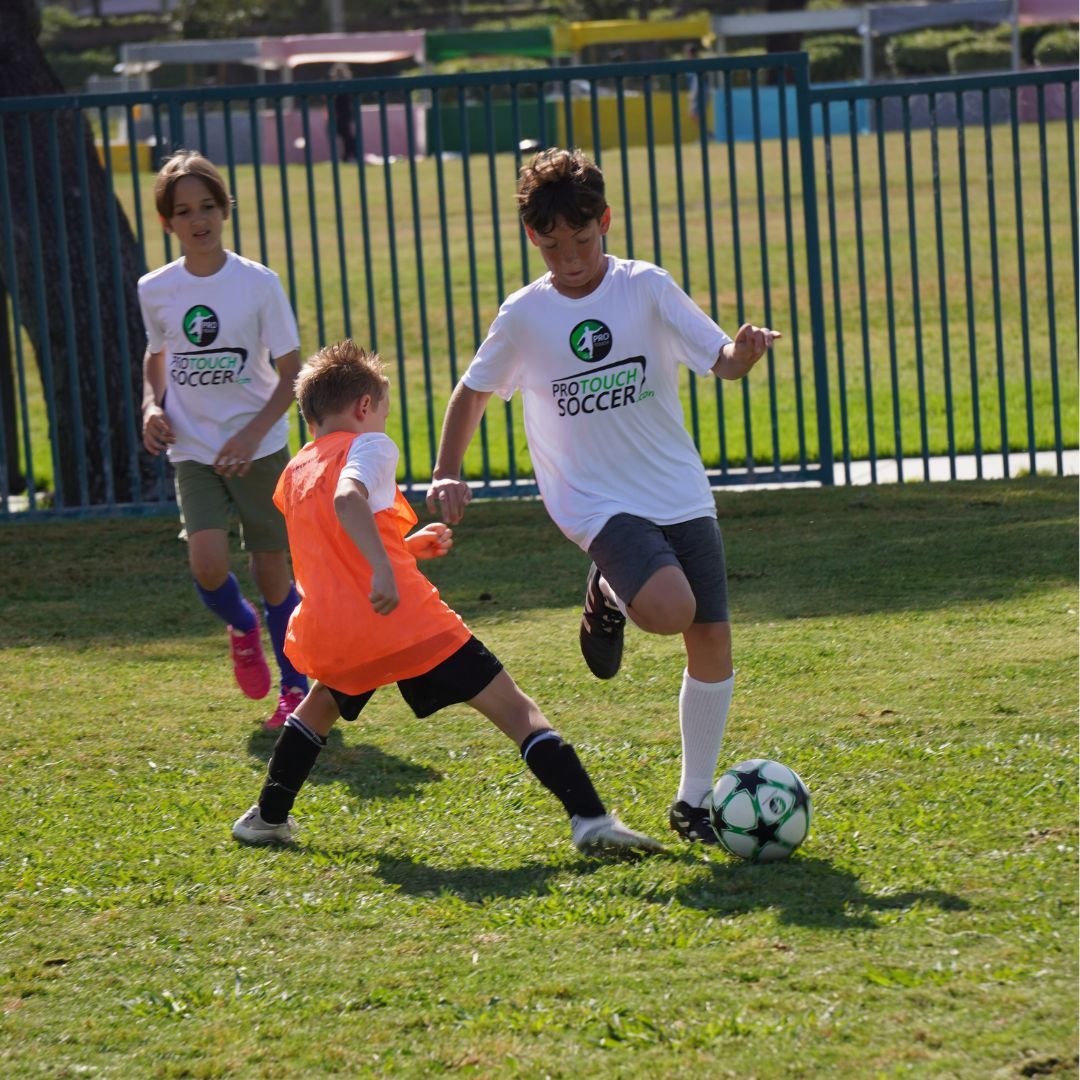
Why Repetition Matters More Than Fancy Drills
Real player development is not built on flashy exercises. It is built through repeating the right fundamentals until they become natural and game-ready.
It is easy to be impressed by flashy soccer drills.
Cone patterns, complicated footwork sequences, and creative setups can look exciting from the outside. They often seem advanced, fun, and professional.
But when it comes to real player development, especially for young athletes, improvement usually comes from something much simpler.
Repetition.
The best players are not great because they have seen the most drills. They are great because they have repeated the right fundamentals so many times that those actions become automatic under pressure.
Why Repetition Builds Real Skill
In youth soccer, players need more than exposure to techniques. They need ownership of them.
A child may learn how to pass with the inside of the foot in one session. But that does not mean the technique is truly developed. To use that skill naturally in a game, they need to repeat it again and again with proper guidance, timing, and correction.
That is how a movement becomes cleaner. That is how confidence grows. That is how a player starts to execute without overthinking.
Repetition helps players:
- Build stronger technique
- Improve coordination and balance
- Gain confidence through familiarity
- React faster in real game situations
- Create habits that hold up under pressure
Without repetition, many skills stay at the surface level. Players may understand them, but they do not truly own them yet.
Why Fancy Drills Can Be Misleading
Fancy drills are not always bad. They can add energy, variety, and enjoyment to training.
The problem is when training becomes too focused on entertainment instead of development.
If a player is constantly moving on to the next new activity, they may never spend enough time on the fundamentals that actually matter most. A drill might look impressive, but if it gives only a few quality repetitions of an important skill, it may not be as effective as it seems.
Young players do not need endless novelty. They need meaningful practice.
Simple exercises done with focus, intensity, and coaching detail often produce much better results than complicated drills that are hard to repeat consistently.
Confidence Comes From Familiarity
One of the biggest benefits of repetition is confidence.
Kids feel more confident when they know what they are doing. When they have practiced a movement many times, they step into it with less hesitation. Their first touch becomes calmer. Their passing becomes sharper. Their decisions become quicker.
That confidence does not come from doing something flashy once. It comes from succeeding at the basics over and over again until the player starts to trust their own ability.
This is especially important for younger players, who are still developing coordination, rhythm, and comfort on the ball.
What Good Repetition Looks Like
Repetition does not mean mindless training.
Good repetition includes purpose and feedback. It means players are repeating an action with concentration while receiving coaching that helps them improve the quality of each attempt.
That could mean:
- Repeating the same type of first touch with both feet
- Practicing passing technique over and over with correct body shape
- Working on dribbling moves until they become smoother and quicker
- Rehearsing finishing movements from similar angles and distances
- Revisiting core skills across multiple sessions instead of just once
The goal is not just to get through the drill. The goal is to sharpen the action each time.
Why This Matters for Parents
As a parent, it is natural to want training to look exciting and advanced.
But sometimes the sessions that look the simplest are the ones doing the most for your child.
If your child is repeating the fundamentals regularly, getting lots of touches, and being coached on the details, that is usually a very good sign. Development is often quieter than people expect. It is built in the steady work, not just in the most eye-catching moments.
Over time, those repeated actions become real tools players can rely on in matches.
Final Thought
Fancy drills may capture attention, but repetition is what creates lasting growth.
For young players, the path to improvement is usually not about doing more complicated things. It is about doing the important things better, more often, and with the right coaching.
That is how skills become habits.
And that is how real development happens.